Berliner Philharmonie tickets 8 September 2026 - Berlin Music Festival: Staatskapelle Berlin | GoComGo.com

Berlin Music Festival: Staatskapelle Berlin

Berliner Philharmonie, Main Auditorium, Berlin, Germany
All photos (1)
Select date and time
8 PM
From
US$ 106

E-tickets: Print at home or at the box office of the event if so specified. You will find more information in your booking confirmation email.

You can only select the category, and not the exact seats.
If you order 2 or 3 tickets: your seats will be next to each other.
If you order 4 or more tickets: your seats will be next to each other, or, if this is not possible, we will provide a combination of groups of seats (at least in pairs, for example 2+2 or 2+3).

Important Info
Type: Classical Concert
City: Berlin, Germany
Starts at: 20:00

E-tickets: Print at home or at the box office of the event if so specified. You will find more information in your booking confirmation email.

You can only select the category, and not the exact seats.
If you order 2 or 3 tickets: your seats will be next to each other.
If you order 4 or more tickets: your seats will be next to each other, or, if this is not possible, we will provide a combination of groups of seats (at least in pairs, for example 2+2 or 2+3).

Programme
Wolfgang Amadeus Mozart: Concerto for piano and orchestra No. 21 in C major K. 467 (1785)
Anton Bruckner: Symphony No. 4 in E-flat major “Romantic” (second version, 1878/80)
Overview

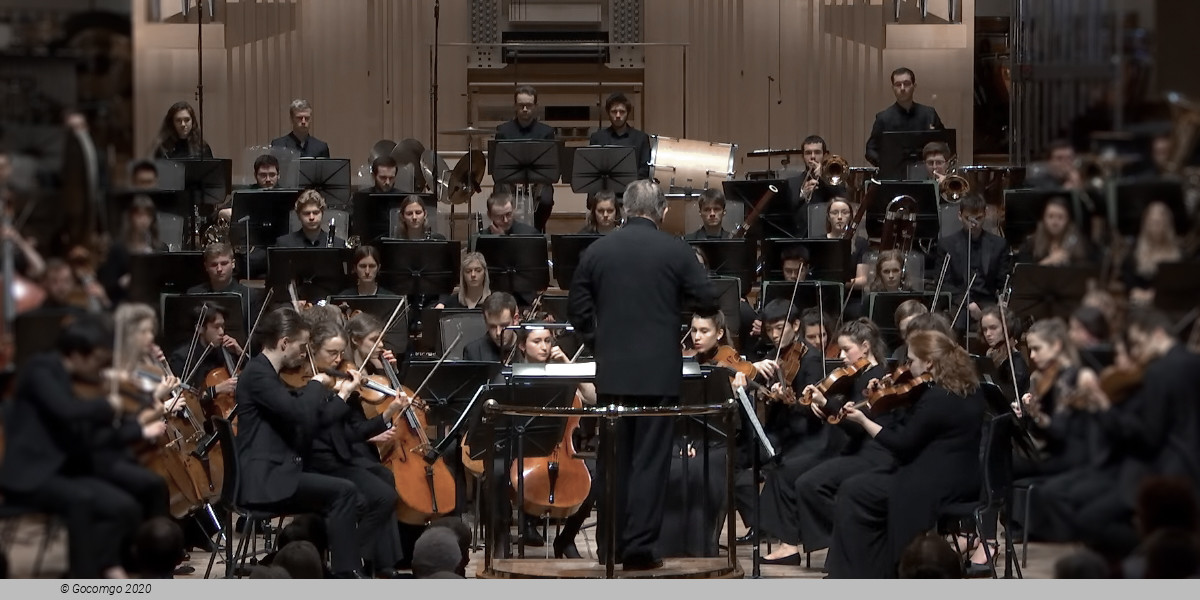
Festive radiance, symphonic solemnity and challenging virtuosity maintain a perfect balance in Wolfgang Amadeus Mozart’s Piano Concerto in C major. The work opens the concert given by the Staatskapelle Berlin conducted by Christian Thielemann which features a benchmark interpretation by the legendary pianist Rudolf Buchbinder who can look back on a career of more than 60 years. The second half is devoted to Anton Bruckner’s Symphony No. 4 whose sonorous natural idylls including the “song of the great tit Zizipe” (Bruckner) communicate a “religious and mysterious Romanticism à la Lohengrin” in the words of the composer.

Anton Bruckner gave his Symphony No. 4 the name Romantic which avowedly refers to its mysterious, religious and pure character. What is more, since the composer surmised that his audiences felt a need for associative musical description – probably quite correctly – he gave his music a programmatic structure through a wide range of character sketches. He refers to “Daybreak” in a medieval town in which the “morning peals of bells” sound from its towers: “the gates open – knights burst out into the open on proud horses – they are enveloped by the magic of nature – the murmur of the forests and birdsong – and so the Romantic image continues to develop.” As in Beethoven’s Pastorale, the connection between nature and happiness is equally tangible in Bruckner’s 4th Symphony. This is supplemented by abrupt changes in dynamics and agglomerations of sound lending the music its general monumental character. It is no coincidence that Bruckner’s symphonies were compared to large cathedrals: through their organ-like “register instrumentation”, the composer created the acoustics of a church interior to which he was accustomed when playing the organ. Mozart’s Piano Concerto in C major also features symphonic monumentality – with the difference that the instrumental dialogue is extended to include the soloist, quasi as a primus inter pares. A general comment Mozart made about his Viennese piano concertos is certainly appropriate in this work: the music was “extremely brilliant” without however “descending into emptiness”. It is no surprise that K. 467 with its catchy melodies has advanced to become one of Mozart’s most popular piano concertos.

Venue Info

Berliner Philharmonie - Berlin
Location   Herbert-von-Karajan-Str. 1

The Berliner Philharmonie is a concert hall in Berlin, Germany and home to the Berlin Philharmonic Orchestra. The Philharmonie lies on the south edge of the city's Tiergarten and just west of the former Berlin Wall. The Philharmonie is on Herbert-von-Karajan-Straße, named for the orchestra's longest-serving principal conductor. The building forms part of the Kulturforum complex of cultural institutions close to Potsdamer Platz.

The Philharmonie consists of two venues, the Grand Hall (Großer Saal) with 2,440 seats and the Chamber Music Hall (Kammermusiksaal) with 1,180 seats. Though conceived together, the smaller hall was opened in the 1980s, some twenty years after the main building.

Hans Scharoun designed the building, which was constructed over the years 1960–1963. It opened on 15 October 1963 with Herbert von Karajan conducting Beethoven's 9th Symphony. It was built to replace the old Philharmonie, destroyed by British bombers on 30 January 1944, the eleventh anniversary of Hitler becoming Chancellor. The hall is a singular building, asymmetrical and tentlike, with the main concert hall in the shape of a pentagon. The height of the rows of seats increases irregularly with distance from the stage. The stage is at the centre of the hall, surrounded by seating on all sides. The so-called vineyard-style seating arrangement (with terraces rising around a central orchestral platform) was pioneered by this building, and became a model for other concert halls, including the Sydney Opera House (1973), Denver's Boettcher Concert Hall (1978), the Gewandhaus in Leipzig (1981), Walt Disney Concert Hall in Los Angeles (2003), and the Philharmonie de Paris (2014).

Jazz pianist Dave Brubeck and his quartet recorded three live performances at the hall; Dave Brubeck in Berlin (1964), Live at the Berlin Philharmonie (1970), and We're All Together Again for the First Time (1973). Miles Davis's 1969 live performance at the hall has also been released on DVD.

On 20 May 2008 a fire broke out at the hall. A quarter of the roof suffered considerable damage as firefighters cut openings to reach the flames beneath the roof. The hall interior sustained water damage but was otherwise "generally unharmed". Firefighters limited damage using foam. The cause of the fire was attributed to welding work, and no serious damage was caused either to the structure or interior of the building. Performances resumed, as scheduled, on 1 June 2008 with a concert by the San Francisco Symphony Youth Orchestra.

The main organ was built by Karl Schuke, Berlin, in 1965, and renovated in 1992, 2012 and 2016. It has four manuals and 91 stops. The pipes of the choir organs and the Tuba 16' and Tuba 8' stops are not assigned to any group and can be played from all four manuals and the pedals.

Important Info
Type: Classical Concert
City: Berlin, Germany
Starts at: 20:00
Top of page