Berliner Philharmonie tickets 7 September 2026 - Berlin Music Festival: NDR Elbphilharmonie Orchester | GoComGo.com

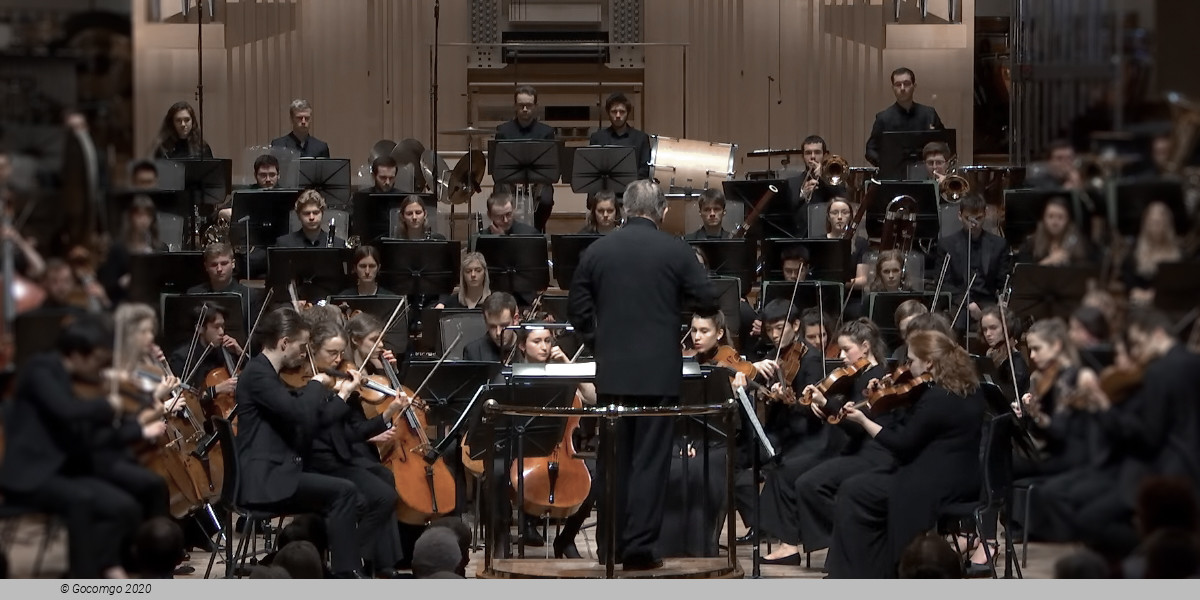
Berlin Music Festival: NDR Elbphilharmonie Orchester

Berliner Philharmonie, Main Auditorium, Berlin, Germany
All photos (1)
Select date and time
8 PM
From
US$ 97

E-tickets: Print at home or at the box office of the event if so specified. You will find more information in your booking confirmation email.

You can only select the category, and not the exact seats.
If you order 2 or 3 tickets: your seats will be next to each other.
If you order 4 or more tickets: your seats will be next to each other, or, if this is not possible, we will provide a combination of groups of seats (at least in pairs, for example 2+2 or 2+3).

Important Info
Type: Classical Concert
City: Berlin, Germany
Starts at: 20:00

E-tickets: Print at home or at the box office of the event if so specified. You will find more information in your booking confirmation email.

You can only select the category, and not the exact seats.
If you order 2 or 3 tickets: your seats will be next to each other.
If you order 4 or more tickets: your seats will be next to each other, or, if this is not possible, we will provide a combination of groups of seats (at least in pairs, for example 2+2 or 2+3).

Programme
Hans Werner Henze: Tristan Préludes for piano, tapes and orchestra (1973, rev. 1991)
Hans Werner Henze: I Prologue – II Lament – III Prelude and Variations – IV Tristan’s Folly – V Adagio: Burla I, Burla II, Ricercare I, Burla III, Ricercare II – VI Epilogue
Johannes Brahms: Symphony No. 1 in C minor op. 68 (2nd version from 1878)
Overview

Hans Werner Henze had already become a legend during his lifetime. To mark the centenary of his birth, the NDR Elbphilharmonie Orchester conducted by Alan Gilbert marks its debut at Musikfest Berlin alongside pianist Tamara Stefanovich with a performance of Henze’s Preludes for piano, tapes and orchestra with the enigmatic title Tristan. This is poignant funeral music containing quotations from works such as Johannes Brahms’s Symphony No. 1 which also features in this concert. 

Hans Werner Henze made it clear that he desired his Tristan Preludes for piano, tapes and orchestra composed in 1973 to be understood as “audio-visual”: as a tonal drama on the concert stage. Right from the first bar, the highly emotional music reflects pain, yearning, love, grief and parting – Henze described his composition as a “scream of death” from the orchestra. Alongside references to Wagner (Tristan und Isolde and the Wesendonck-Lieder), the six-section work with its “coup de théâtre” additionally contains quotations from Brahms and distorted taped sounds of Frédéric Chopin’s funeral march from his Piano Sonata in B minor, “glistening like the sea on an autumn evening” (Henze). The concluding epilogue features a taped child’s voice reciting verses narrating Isolde’s tragic “love-death” by the 12th-century Anglo-Norman poet Thomas d’Angleterre in an English translation. After Henze’s funeral music with prominent piano part which mourns for all the dead “whose loss has now impoverished humanity”, Alan Gilbert and the NDR Elbphilharmonie Orchester dedicate their attention to Johannes Brahms’s Symphony No. 1 which adheres on a dramatic level to Beethoven’s epigram “per aspera ad astra” [through darkness to light]. The bleak struggle in the C minor opening movement with its forceful timpani beats and sudden dramatic swings stands in contrast to the finale which ultimately finds its conclusion in a supremely radiant C major.

Venue Info

Berliner Philharmonie - Berlin
Location   Herbert-von-Karajan-Str. 1

The Berliner Philharmonie is a concert hall in Berlin, Germany and home to the Berlin Philharmonic Orchestra. The Philharmonie lies on the south edge of the city's Tiergarten and just west of the former Berlin Wall. The Philharmonie is on Herbert-von-Karajan-Straße, named for the orchestra's longest-serving principal conductor. The building forms part of the Kulturforum complex of cultural institutions close to Potsdamer Platz.

The Philharmonie consists of two venues, the Grand Hall (Großer Saal) with 2,440 seats and the Chamber Music Hall (Kammermusiksaal) with 1,180 seats. Though conceived together, the smaller hall was opened in the 1980s, some twenty years after the main building.

Hans Scharoun designed the building, which was constructed over the years 1960–1963. It opened on 15 October 1963 with Herbert von Karajan conducting Beethoven's 9th Symphony. It was built to replace the old Philharmonie, destroyed by British bombers on 30 January 1944, the eleventh anniversary of Hitler becoming Chancellor. The hall is a singular building, asymmetrical and tentlike, with the main concert hall in the shape of a pentagon. The height of the rows of seats increases irregularly with distance from the stage. The stage is at the centre of the hall, surrounded by seating on all sides. The so-called vineyard-style seating arrangement (with terraces rising around a central orchestral platform) was pioneered by this building, and became a model for other concert halls, including the Sydney Opera House (1973), Denver's Boettcher Concert Hall (1978), the Gewandhaus in Leipzig (1981), Walt Disney Concert Hall in Los Angeles (2003), and the Philharmonie de Paris (2014).

Jazz pianist Dave Brubeck and his quartet recorded three live performances at the hall; Dave Brubeck in Berlin (1964), Live at the Berlin Philharmonie (1970), and We're All Together Again for the First Time (1973). Miles Davis's 1969 live performance at the hall has also been released on DVD.

On 20 May 2008 a fire broke out at the hall. A quarter of the roof suffered considerable damage as firefighters cut openings to reach the flames beneath the roof. The hall interior sustained water damage but was otherwise "generally unharmed". Firefighters limited damage using foam. The cause of the fire was attributed to welding work, and no serious damage was caused either to the structure or interior of the building. Performances resumed, as scheduled, on 1 June 2008 with a concert by the San Francisco Symphony Youth Orchestra.

The main organ was built by Karl Schuke, Berlin, in 1965, and renovated in 1992, 2012 and 2016. It has four manuals and 91 stops. The pipes of the choir organs and the Tuba 16' and Tuba 8' stops are not assigned to any group and can be played from all four manuals and the pedals.

Important Info
Type: Classical Concert
City: Berlin, Germany
Starts at: 20:00
Top of page