Carnegie Hall tickets 17 November 2026 - Jupiter Ensemble | GoComGo.com

Jupiter Ensemble

Carnegie Hall, Weill Recital Hall, New York, USA
All photos (1)
Select date and time
7:30 PM
From
US$ 94

E-tickets: Print at home or at the box office of the event if so specified. You will find more information in your booking confirmation email.

You can only select the category, and not the exact seats.
If you order 2 or 3 tickets: your seats will be next to each other.
If you order 4 or more tickets: your seats will be next to each other, or, if this is not possible, we will provide a combination of groups of seats (at least in pairs, for example 2+2 or 2+3).

Important Info
Type: Classical Concert
City: New York, USA
Starts at: 19:30

E-tickets: Print at home or at the box office of the event if so specified. You will find more information in your booking confirmation email.

You can only select the category, and not the exact seats.
If you order 2 or 3 tickets: your seats will be next to each other.
If you order 4 or more tickets: your seats will be next to each other, or, if this is not possible, we will provide a combination of groups of seats (at least in pairs, for example 2+2 or 2+3).

Cast
Performers
Ensemble: Jupiter Ensemble
Mezzo-Soprano: Lea Desandre
Lute: Thomas Dunford
Programme
Overview

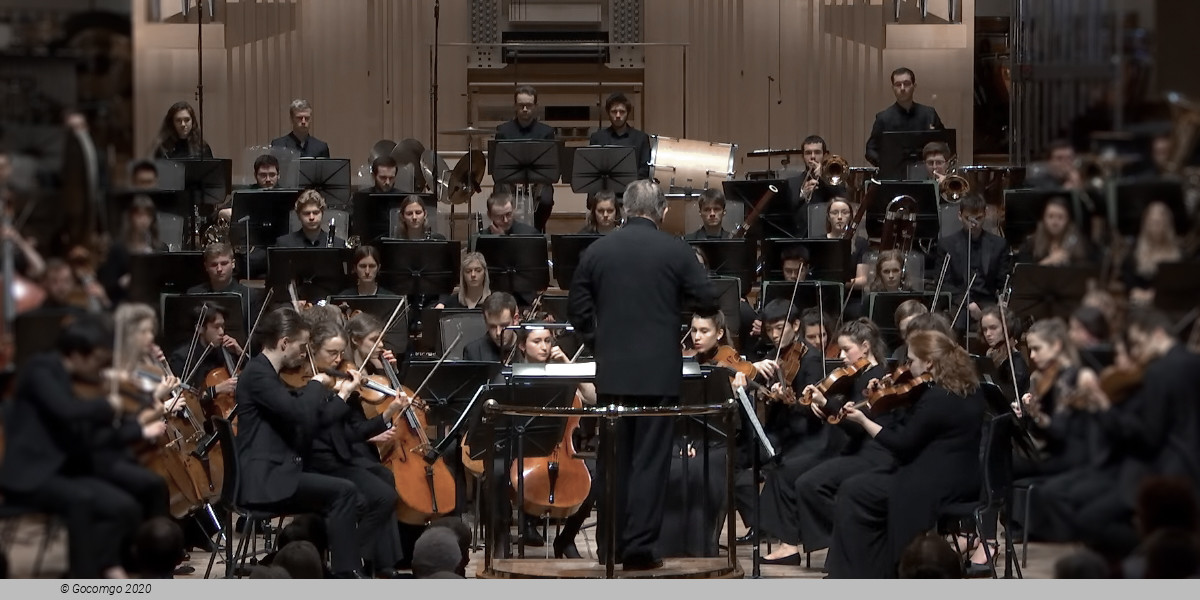
Jupiter Ensemble is a vibrant early music ensemble adored by audiences, led by the “Eric Clapton of the lute” (BBC Magazine), Thomas Dunford, and featuring “one of today’s most exciting voices in early-music performance” (The New York Times), Lea Desandre. Tonight’s performance draws largely from Jupiter’s acclaimed Amazone program of French, Italian, and German Baroque arias. Featuring “flabbergastingly good” string playing, “charm [that] masks genius,” and “curation at its finest," it is “a feast of Baroque music [by] enviously intelligent, inventive and generous musicians” (Gramophone).

Program

PROVENZALE "Non posso far" from Lo schiavo di sua moglie

CAVALLI Sinfonia to Act I from Ercole amante

PROVENZALE "Lasciatemi morir, stelle crudeli" from Lo schiavo di sua moglie

VIVIANI "Muove il pie fuorie d’averno" from Mitilene, regina delle Amazoni

SCHÜRMANN Sinfonia pour la tempête from Die getreue Alceste

C. PALLAVICINO "Vieni, corri" from L'Antiope

C. PALLAVICINO "Sdegni furori barbari" from L'Antiope

ANNE DANICAN PHILIDOR Selections from Les amazones

MARAIS "L'Ameriquaine"

DESTOUCHES "Ô mort! Ô triste mort" from Marthésie, première reine des amazones

VIVALDI Sinfonia from Ercole su ’l Termodonte

SCHÜRMANN "Non ha fortuna il pianto mio" from Die getreue Alceste

DE BOTTIS "Lieti fiori" from Mitilene Regina delle Amazzoni

VIVALDI "Onde chiare che sussurrate" from Ercole su 'l Termodonte

VIVALDI "Armatae face" from Juditha triumphans

Venue Info

Carnegie Hall - New York
Location   57th Street and Seventh Avenue

Carnegie Hall is a concert venue in Midtown Manhattan in New York City, United States, located at 881 Seventh Avenue, occupying the east side of Seventh Avenue between West 56th Street and West 57th Street, two blocks south of Central Park.

Designed by architect William Burnet Tuthill and built by philanthropist Andrew Carnegie in 1891, it is one of the most prestigious venues in the world for both classical music and popular music. Carnegie Hall has its own artistic programming, development, and marketing departments, and presents about 250 performances each season. It is also rented out to performing groups. The hall has not had a resident company since 1962, when the New York Philharmonic moved to Lincoln Center's Philharmonic Hall (renamed Avery Fisher Hall in 1973 and David Geffen Hall in 2015).

Carnegie Hall has 3,671 seats, divided among its three auditoriums.

Carnegie Hall contains three distinct, separate performance spaces.

Carnegie Hall is one of the last large buildings in New York built entirely of masonry, without a steel frame; however, when several flights of studio spaces were added to the building near the turn of the 20th century, a steel framework was erected around segments of the building. The exterior is rendered in narrow Roman bricks of a mellow ochre hue, with details in terracotta and brownstone. The foyer avoids typical 19th century Baroque theatrical style with the Florentine Renaissance manner of Filippo Brunelleschi's Pazzi Chapel: white plaster and gray stone form a harmonious system of round-headed arched openings and Corinthian pilasters that support an unbroken cornice, with round-headed lunettes above it, under a vaulted ceiling. The famous white and gold auditorium interior is similarly restrained. The firm of Adler & Sullivan of Chicago, noted for the acoustics of their theaters, were hired as consultant architects though their contributions are not known.

Important Info
Type: Classical Concert
City: New York, USA
Starts at: 19:30
Top of page