Georgian National Opera and Ballet Theater of Tbilisi tickets 23 October 2026 - L’elisir D’amore | GoComGo.com

L’elisir D’amore

Georgian National Opera and Ballet Theater of Tbilisi, Tbilisi, Georgia
All photos (15)
Select date and time
7 PM
From
US$ 57

E-tickets: Print at home or at the box office of the event if so specified. You will find more information in your booking confirmation email.

You can only select the category, and not the exact seats.
If you order 2 or 3 tickets: your seats will be next to each other.
If you order 4 or more tickets: your seats will be next to each other, or, if this is not possible, we will provide a combination of groups of seats (at least in pairs, for example 2+2 or 2+3).

Important Info
Type: Opera
City: Tbilisi, Georgia
Starts at: 19:00

E-tickets: Print at home or at the box office of the event if so specified. You will find more information in your booking confirmation email.

You can only select the category, and not the exact seats.
If you order 2 or 3 tickets: your seats will be next to each other.
If you order 4 or more tickets: your seats will be next to each other, or, if this is not possible, we will provide a combination of groups of seats (at least in pairs, for example 2+2 or 2+3).

Cast
Performers
Conductor: Fabrizio Cassi
Conductor: Levan Jagaev
Orchestra: Tbilisi Symphony Orchestra
Creators
Composer: Gaetano Donizetti
Librettist: Eugène Scribe
Librettist: Felice Romani
Director: Fernando Botero
Opera Company: Opera Theatre of Tbilisi
Director: Victor Garcia Sierra
Overview

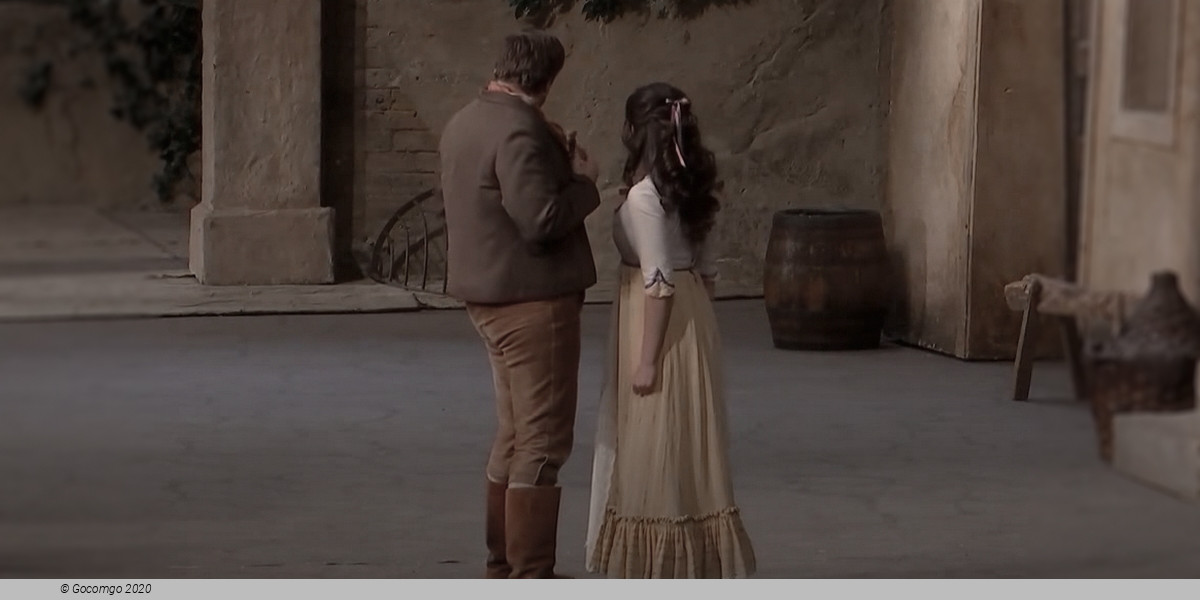
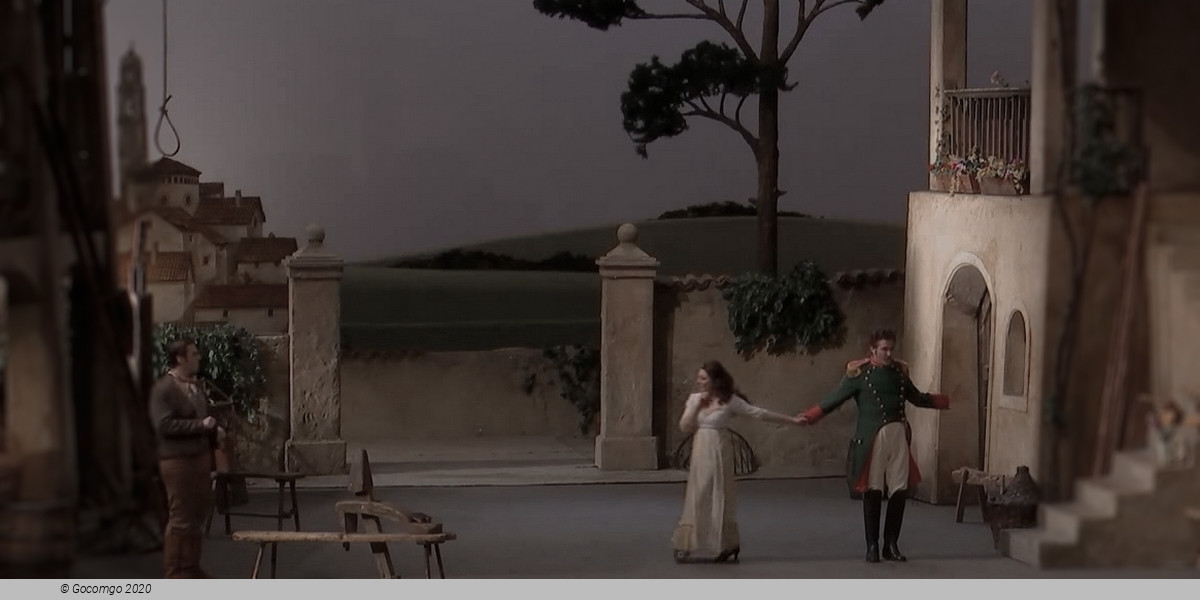
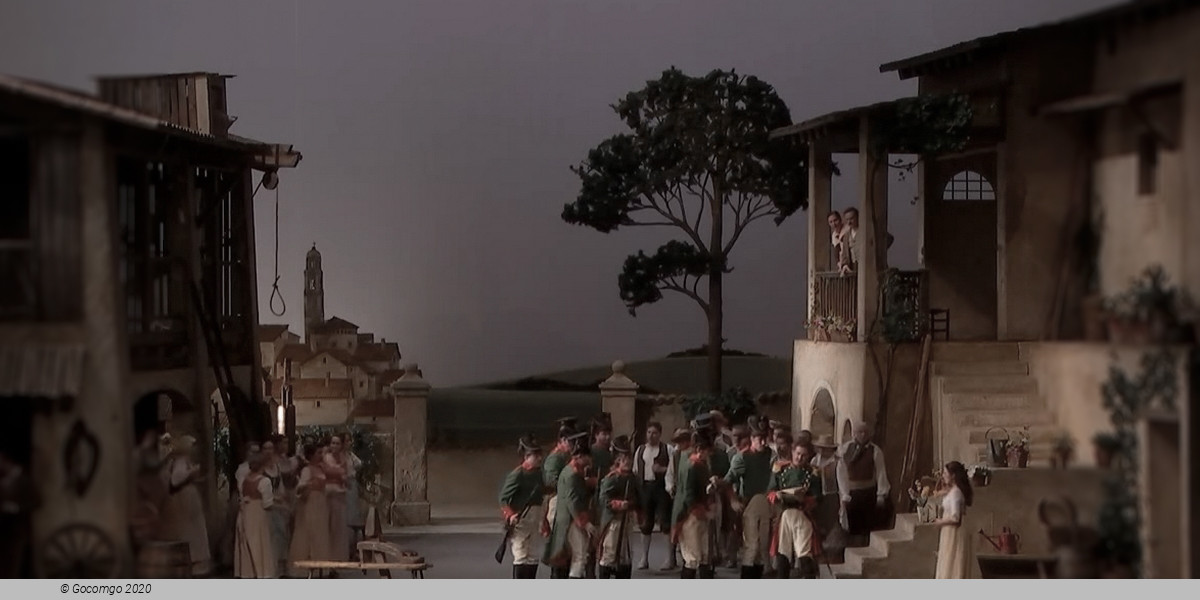
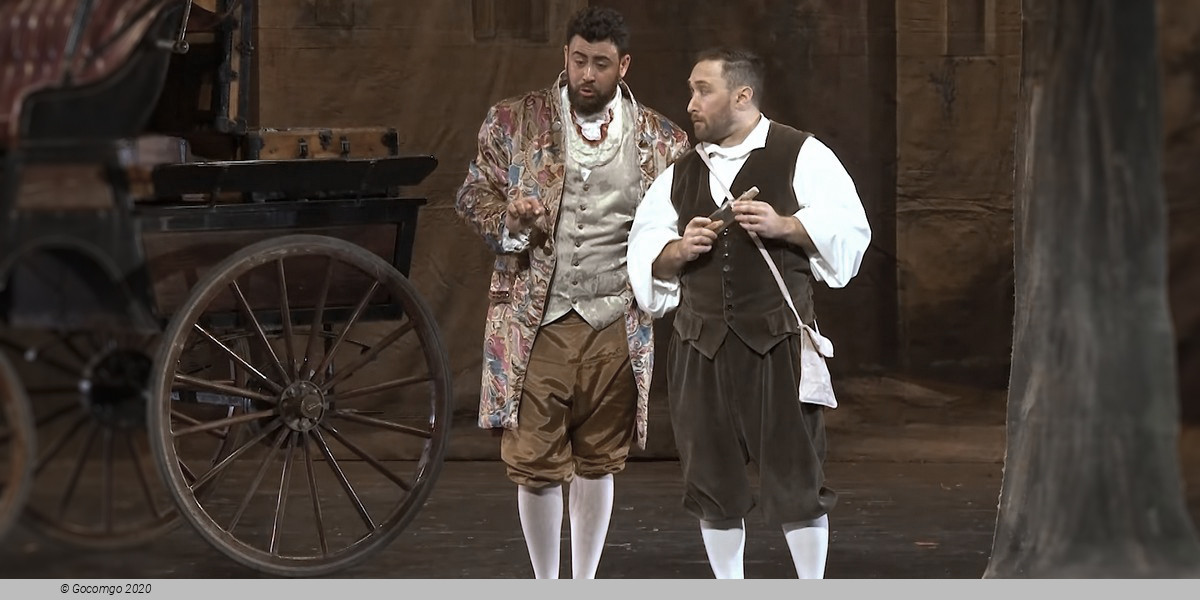
Gaetano Donizetti’s beloved comic opera tells the story of Nemorino, a shy young man who hopes to win the heart of the beautiful Adina with the help of a mysterious love potion. Filled with charming melodies, humour and romance, L’elisir d’amore is a delightful tale of love, jealousy and mistaken beliefs, presented by the Tbilisi Z. Paliashvili Opera and Ballet State Theatre.

History
Premiere of this production: 12 May 1832, Teatro della Canobbiana, Milan

L'elisir d'amore (The Elixir of Love) is a comic opera (melodramma giocoso) in two acts by the Italian composer Gaetano Donizetti. Felice Romani wrote the Italian libretto, after Eugène Scribe's libretto for Daniel Auber's Le philtre (1831). The opera premiered on 12 May 1832 at the Teatro della Canobbiana in Milan.

Synopsis

Place: A small village in the Basque Country
Time: The end of the 18th century

Act 1
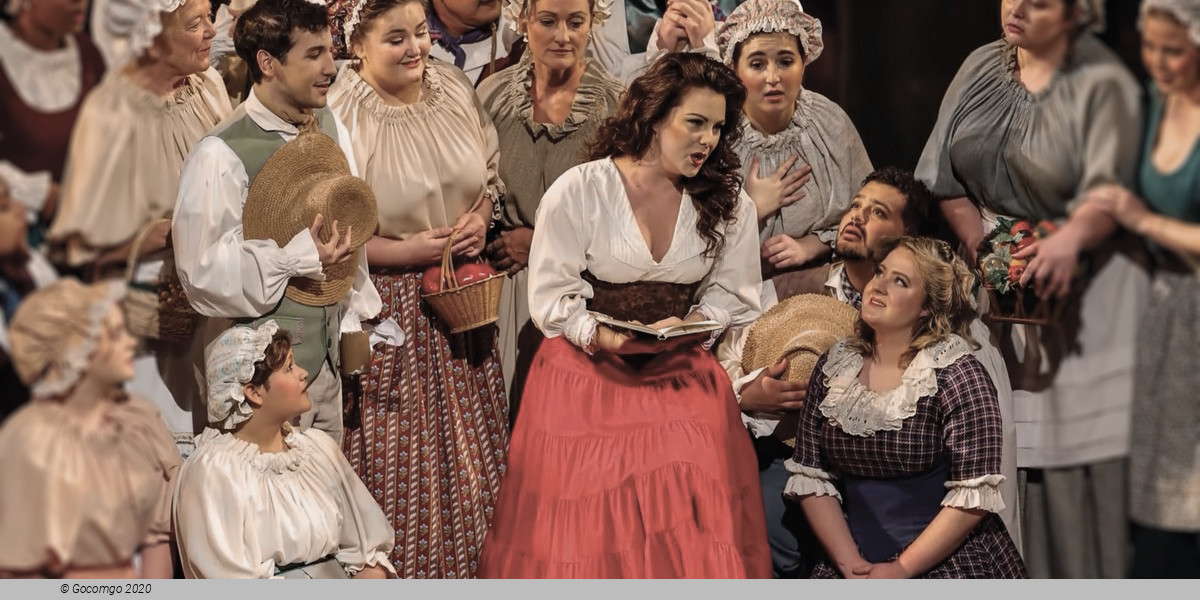
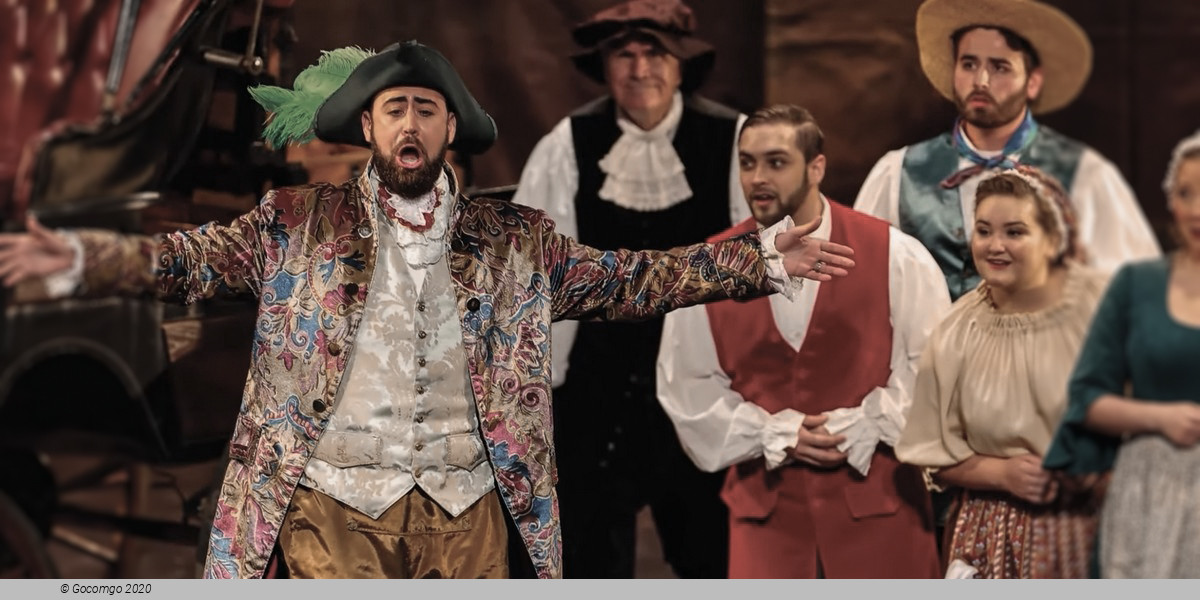
Nemorino, a poor peasant, is in love with Adina, a beautiful landowner, who torments him with her indifference. When Nemorino hears Adina reading to her workers the story of Tristan and Isolde, he is convinced that a magic potion will help him to gain Adina's love. The self-important Sergeant Belcore appears with his regiment and immediately sets about courting Adina in front of everyone. Nemorino becomes anxious (although, Adina meanwhile secretly derides Belcore's complacency) and, alone with Adina, reveals his love for her. Yet Adina rebuffs him, saying she wants a different lover every day and following her example would do Nemorino better. Nemorino declares that his feelings will never change. The travelling quack doctor, Dulcamara (the self-proclaimed Dr. Encyclopedia), arrives, selling his bottled cure-all to the townspeople. Nemorino innocently asks Dulcamara if he has any of Isolde's love potion. Despite failing to recognise the name "Isolde", Dulcamara's commercial talents nevertheless enable him to sell a bottle of the cure-all – in reality only cheap wine – to Nemorino, withdrawing all his savings.

To make a safe escape, Dulcamara tells Nemorino the potion needs 24 hours to take effect – by which time, the doctor will be long gone. Nemorino drinks the potion in a haste in order to watch the effect tomorrow. Emboldened by the "elixir" (in fact, drunk), Nemorino feigns indifference when he encounters Adina, as he expects that the elixir will facilitate his conquest of Adina the following day. She becomes increasingly annoyed; perhaps she has feelings for Nemorino after all? Belcore returns and proposes marriage to Adina. Still riled by Nemorino and wishing to give him a lesson, Adina falsely promises to marry Belcore in six days' time. Yet Nemorino only laughs in response: such confidence is sustained in the belief in the magic potion. However, when Belcore learns that his regiment must leave the next morning, Adina promises to marry him before his departure. This of course panics Nemorino, who cries out for Dr. Dulcamara to come to his aid. Adina, meanwhile, invites everyone to the wedding.

Act 2
Adina and Belcore's wedding party is in full swing. Dr. Dulcamara encourages Adina to sing a duet with him to entertain the guests. The notary arrives to make the marriage official. Adina is annoyed to see that Nemorino has not appeared, for the whole deal has been intended only to punish him. While everyone goes to witness the signing of the wedding contract, Dulcamara stays behind, helping himself to food and drink. Having seen the notary, Nemorino appears, depressed, as he believes that he has lost Adina. He sees Dulcamara and frantically begs him for a more powerful, faster-acting elixir. Although Dulcamara is proud to boast of his philanthropy, upon discovering that Nemorino now has no money he changes his tune and marches off, refusing to supply him anything. Belcore emerges, musing about why Adina has suddenly put off the wedding and signing of the contract. He spots Nemorino and asks his rival why he is depressed. When Nemorino says he needs cash, Belcore suggests joining the army, as he'll receive funds on the spot. Belcore tries to excite Nemorino with tales of military life, while Nemorino only thinks of getting the potion and thus winning Adina, if only for a day before departure. Belcore produces a contract, which Nemorino signs in return for the money. Nemorino privately vows to rush and buy more potion, while Belcore muses about how sending Nemorino off to war has so easily dispatched his rival.

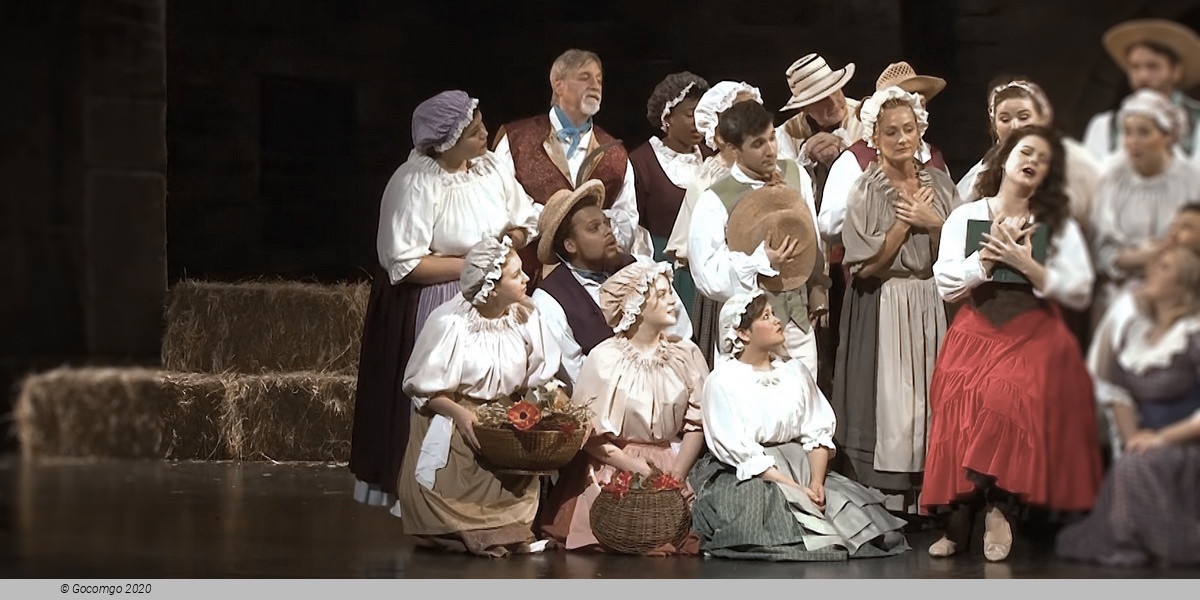
After the two men have left, Giannetta gossips with the women of the village. Swearing them all to secrecy, she reveals that Nemorino's uncle has just died and left his nephew a large fortune. However, neither Nemorino nor Adina is yet aware of this. Nemorino enters, having spent his military signing bonus on – and consumed – a large amount of the fake elixir from Dr. Dulcamara. Hoping to share his fortune, the women approach Nemorino with overly friendly greetings. So out of character is this that Nemorino takes it as proof of the elixir's efficacy. Adina sees Nemorino with the women, is rattled by his newfound popularity, and asks Dr. Dulcamara for an explanation. Unaware that Adina is the object of Nemorino's affection, Dulcamara explains that Nemorino spent his last penny on the elixir and joined the army for money to get more, so desperate was he to win the love of some unnamed cruel beauty. Adina immediately recognises Nemorino's sincerity, regrets her behaviour and realises that she has loved Nemorino all along. Although Dulcamara seizes the opportunity to try to sell her some of his potion to win back Nemorino, Adina declares that she has full confidence in her own powers of attraction.

Nemorino appears alone, pensive, reflecting on a tear he saw in Adina's eye when he was ignoring her earlier. Solely based on that, he convinces himself that Adina loves him. She enters and asks why he has chosen to join the army and leave the village. When Nemorino explains that he was seeking a better life, Adina responds that he is loved and that she has purchased back his military contract from Sergeant Belcore. She offers the cancelled contract to Nemorino and reassures him that, if he stays, he will be happy. As he takes the contract, Adina turns to leave. Nemorino believes she is abandoning him and flies into a desperate fit, vowing that if he is not loved he might as well go off and die a soldier. Deeply moved by his fidelity, Adina finally declares that she will love Nemorino forever. Nemorino is ecstatic. Adina begs him to forgive her, which he does with a kiss. Belcore returns to see Nemorino and Adina in an embrace. When Adina explains that she loves Nemorino, the Sergeant takes the news in stride, noting that there are plenty of other women in the world. Adina and Nemorino learn about the inheritance from his uncle. Dulcamara returns and boasts of the success of his elixir: Nemorino is now not only loved but also rich. He exults in the boost this will bring to the sales of his product. As he prepares to leave, everyone queues up to buy the elixir and hails Dulcamara as a great physician.

Venue Info

Georgian National Opera and Ballet Theater of Tbilisi - Tbilisi
Location   Shota Rustaveli Ave, 25

The Georgian National Opera and Ballet Theater of Tbilisi, formerly known as the Tiflis Imperial Theater, is an opera house situated on Rustaveli Avenue in Tbilisi, Georgia. Founded in 1851, Tbilisi Opera is the main opera house of Georgia and one of the oldest such establishments in eastern Europe. Since 1896, the theatre has resided in an exotic neo-Moorish edifice originally constructed by Victor Johann Gottlieb Schröter, a prominent architect of Baltic German origin. Although definitively Oriental in its decorations and style, the building's layout, foyers and main hall are that of a typical European opera house.

The foundation of the Tiflis Imperial Opera was closely intertwined with the turbulent political processes in Georgia following the country's annexation by the Russian Empire in 1801. In the first half of the 19th century, Georgia remained a restless and poorly integrated part of the empire. Unhappy with Russian policies, in 1832 Georgian aristocracy hatched a plot against the local Russian authorities, which was discovered and resulted in multiple arrests and repressions in the subsequent years. Anxious to reconcile the Georgian opinion in view of these lingering difficulties, the new Viceroy of the Caucasus, Count Mikhail Vorontsov, implemented a number of cultural initiatives, one of which was the foundation of the opera. The declared purpose of its establishment was to benefit the "public well-being" but it also served an important political goal of fully integrating the local Georgian aristocracy into the Imperial social life, thereby distracting them from any further anti-Russian conspiracies.

To satisfy Georgians, Vorontsov went on to patronize Georgian-language theatre performances and did everything Saint Petersburg would permit to win over locals. These type of efforts were particularly relevant in light of the ongoing Shamil's rebellion in the North Caucasus, which prompted some Russians to see Georgian aristocrats as the only bulwark protecting Russia's southern imperial borders. Vorontsov's conciliatory efforts were not without controversy, as not all Russians were enthusiastic about non-Russian contributions to the city's cultural development; some objected to Georgian-language productions and had them moved to different days, rather than precede regular opera performances as it was done up to that point.

At Vorontsov's initiative, the original theatre site was chosen on Rustaveli Avenue in Erivansky Square, an area the administration correctly envisioned would be the centre of the expanding city. The land was given free of charge from the governor of the Tiflis Governorate, provided the theatre would belong to the city.

The foundations of The Tiflis Imperial Theater were laid down on 15 April 1847. Italian architect Giovanni Scudieri, who had come to Tiflis from Odessa, was hired to oversee the project. The construction was completed in 1851. The interior of the theatre was decorated by a Parisian designer, using coloured velvet, gold and silver details, and expensive silks. A massive chandelier weighing 1,218 kilograms (2,685 lb), unassembled in 12 large boxes, was shipped by a steamer from Marseille to Kulevi on the Black Sea coast. Buffalo pulled the chandelier more than 300 kilometres (190 mi) to Tiflis. Russian painter Grigory Gagarin created the artwork for the theatre and its first stage curtain. The second curtain was designed by Sergo Kobuladze in the 1950s. Vorontsov appointed writer Vladimir Sollogub as the theatre's first director.

Opening and the first performances

On 12 April 1851, the theatre held its grand opening, attended by the high society of Tiflis. As the theatre stage was not yet complete, the theatre instead held a masked ball and charity fundraiser for the Saint Nino Women's College.

Several months later the popular Parisian newspaper L'Illustration (issue 25 October 1851) printed a large article by Edmond de Bares with two pictures of the interior of the theatre. The author wrote, "This is the only theatre in the city, the interior of which is totally Moorish in style, and is doubtless one of the most elegant, beautiful and fascinating theatrical constructions, conceived by man."

In the spring of 1851, the theatre director invited an Italian opera troupe, which had been touring the Russian Empire under the conductorship of Francisco Asenjo Barbieri, to perform in Tiflis. The Italians travelled by carriage from Novocherkassk but became ill and exhausted as they made their way into the Caucasus Mountains. By the time they reached Stavropol in southern Russia, they had lost all patience and refused to continue to Tiflis. Finally, they resumed, pausing often to rest as they travelled via the Georgian Military Highway, before arriving in Tiflis on 9 October 1851.

One month later, the first theatrical season officially opened in Tiflis with Lucia di Lammermoor by Gaetano Donizetti. After the spectacle, which had great success, the hosts led Barbieri and the company to the left bank of the Kura River for a public feast, where people celebrated on boats for the whole night.

The Italians performed 12 different opera performances over the course of three months. As a consequence, the orchestra was enriched with new instruments and musical scores. Foreign orchestra performers came to Tiflis and some settled there.

Fire and reconstruction

On 11 October 1874, a fire began before a performance of Vincenzo Bellini's Norma. Though the fire brigade was across the street, the firefighters did not respond at first and did not bring ladders when they did, leading to outrage and accusations of the fire being intentional. The theatre was completely destroyed, including the rich musical library, costumes, scenery, props and all of Gagarin's paintings.

Plans were made to rebuild the opera house. The theatre decided to continue its season from the "Summer Theater", and returned on 27 December with its production of Norma.

The city held a contest for a new architectural design. Viktor Schröter, an architect of German origin from Saint Petersburg, submitted the winning design. Construction of the new theatre took years to get underway. There were repeated delays throughout the project, with the design not officially approved by Governor Grand Duke Michael Nikolaevich until 1880. Even after the construction began, it would sometimes come to a complete halt.

The theatre finally reopened in 1896.

20th century

In 1937, the theatre was renamed in honour of Zacharia Paliashvili, one of Georgia's national composers. Unrest and destabilization in Georgia in the 1990s affected the Tbilisi opera theatre, as it did many others in the country. The government could not provide sufficient resources for theatre to function: this prevented the creation of new scenery or costumes, the recruitment of artists, and maintenance of the already vulnerable building. Following the Rose Revolution, however, the newly elected government improved the situation in opera as part of its cultural reforms.

Important Info
Type: Opera
City: Tbilisi, Georgia
Starts at: 19:00
Top of page