Act I
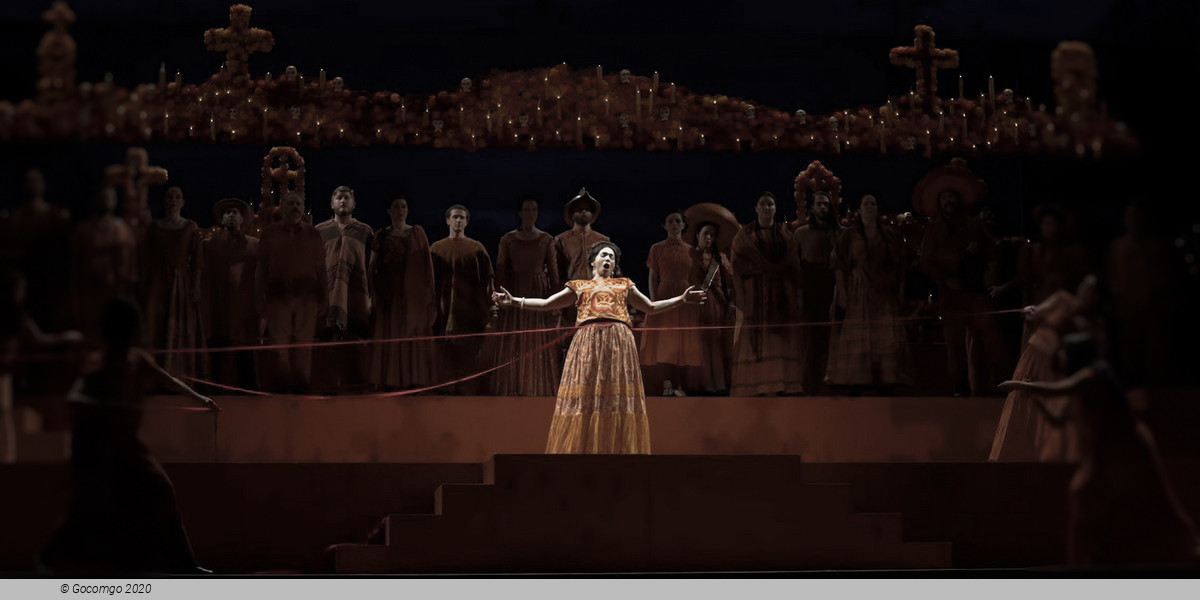
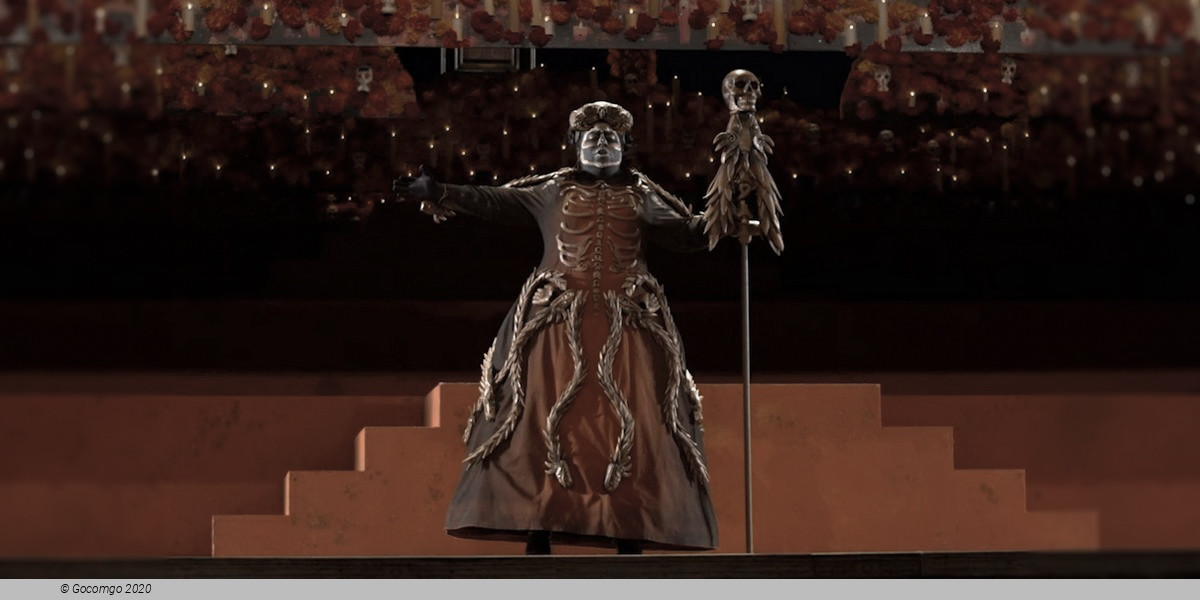
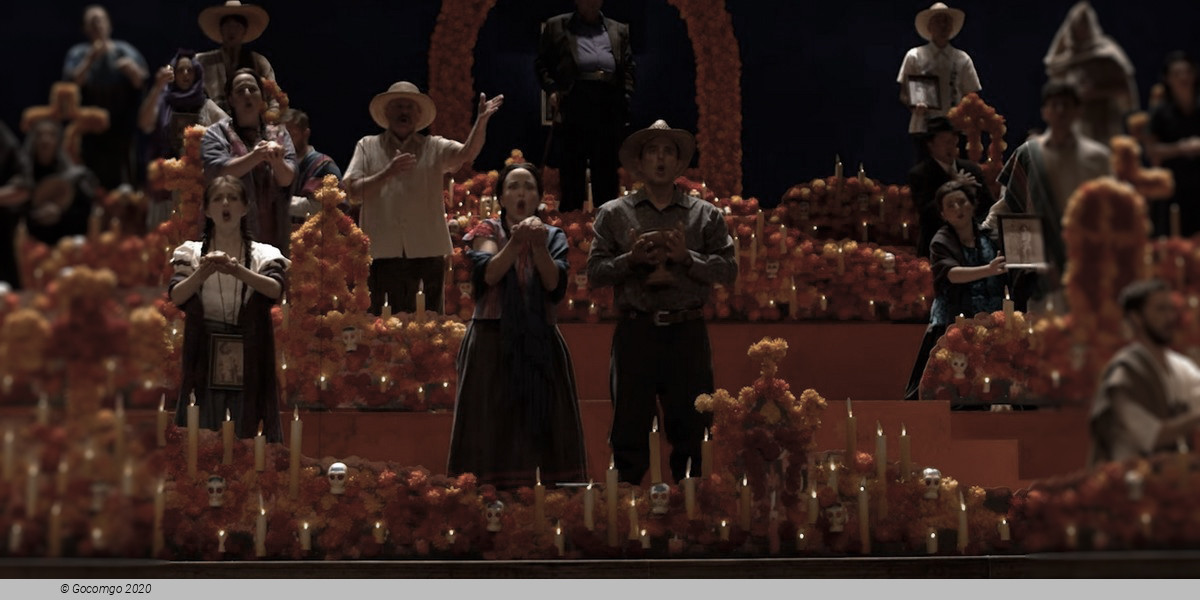
A chorus of villagers gathers to await their departed loved ones on the day of the dead—they summon them by name and memory. An infirm Diego Rivera appears quietly among them, but stays apart. Villagers notice him and a few, on a dare, speak to him. They joke affectionately about the ritual, explaining that “it’s the faith in your soul” that brings back the dead, and wish him well. Diego summons up the courage to speak to Frida; he sings an aria (“come back to me”) revealing his fears and loneliness, and collapses to the ground. He confesses that he would like to accept god, and begs Frida to come “since you have never returned.” Villagers help Diego up; an old woman tries to sell him flowers. He makes a joke of it, to save his dignity, but disconcerted by her, he exits. She reveals her true identity as Catrina, Keeper of the Dead.
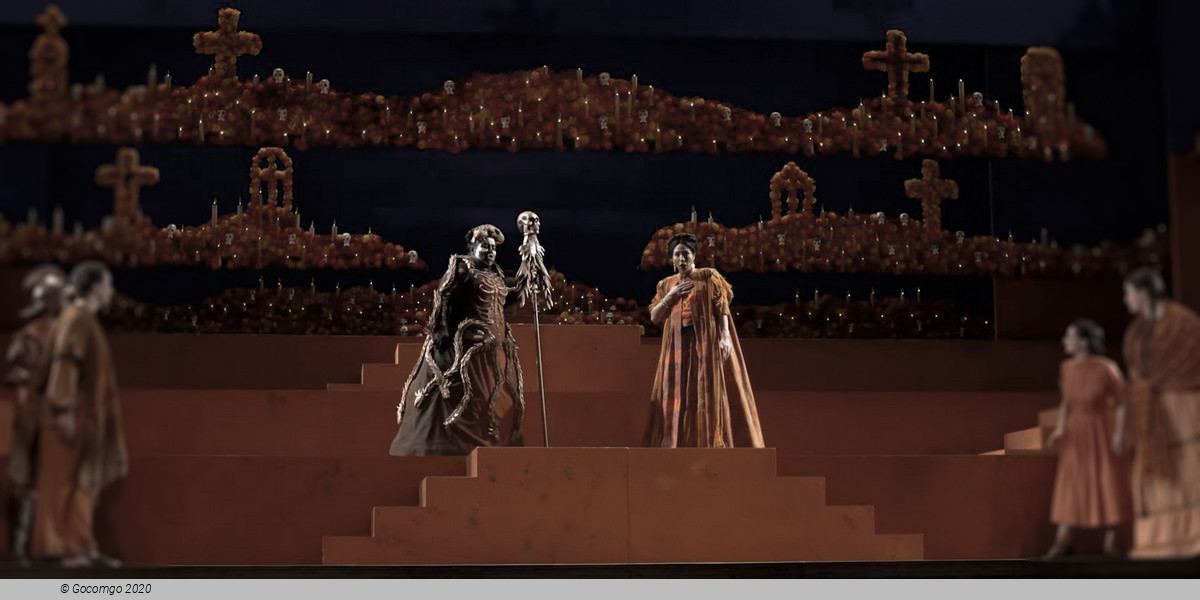
Catrina asks for the Lord’s mercy on Diego Rivera, and summons Frida Kahlo. Frida ascends from below, dressed plainly (not as “Frida Kahlo”), and demands to know what Catrina wants of her. She bristles at the suggestion that Diego is calling her, and tries to send Catrina packing. Catrina charges Frida with accompanying her dying husband on his journey to the underworld. This stops Frida cold.
Frida sings an aria (“The World”) about having found release in death—release from her mercurial relationship with Diego, and blessed release from agonizing pain. “Why go back to the world?” Catrina tries to persuade Frida that Diego is lost without her, but Frida challenges her, preferring her refuge of darkness and silence. Finally, Catrina implores Frida to be “an angel to Diego,” but Frida’s retort: “In my life he was a demon.”
A caravan of Departed Souls enters with bundles of fabric and clothing as they prepare for their return. They try to tempt Frida with their wares, but she declines. Catrina catches a young man trying to sneak back to the world dressed as a woman and chases him off.
Meanwhile, Frida notices a young actor, Leonardo, practicing his impression of Greta Garbo. He wants to go back as Garbo, to please a Garbo fan who waits every year for his idol. “I do it to go back to the world,” Leonardo tells Frida. “To be an actor once again.” Frida wavers for a moment, but stops herself.
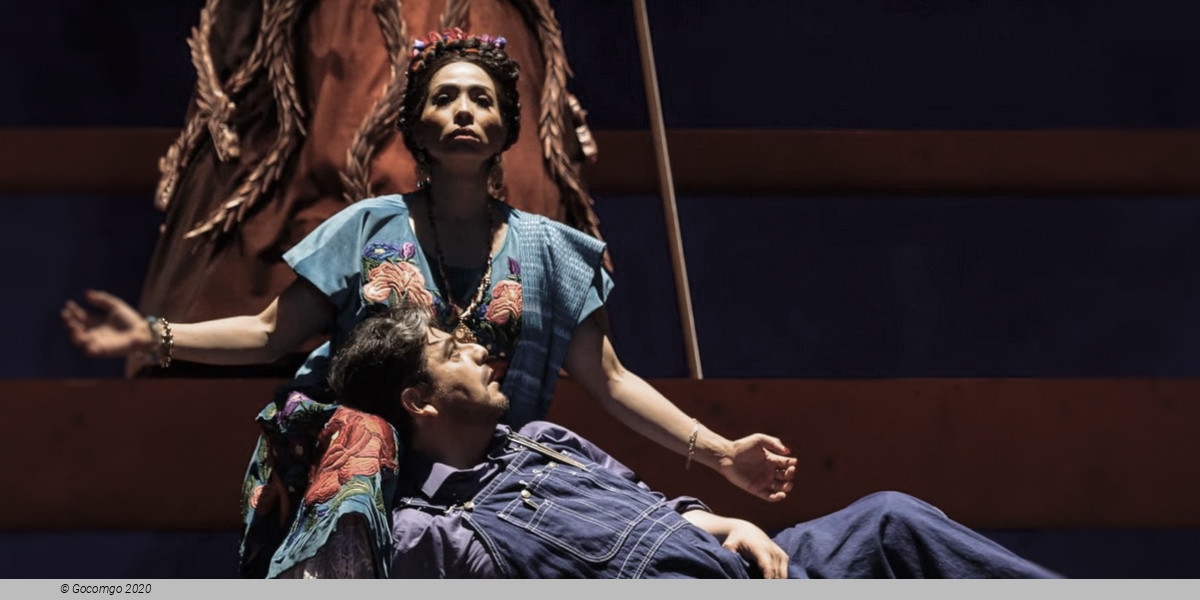
Leonardo seduces Frida with the possibility of painting “a new Frida,” one “without pain, without anguish.” He dresses her up in her trademark clothes, adorning her hair with ribbons and flowers, appealing to her vanity and the pleasure she took in her art. Catrina returns, calling out the names of those who have been summoned, and readying them for departure. She calls on Frida, who continues to demur. Catrina notices Leonardo in his Garbo costume, forbidding his ruse, but Frida pleads for him, and Catrina relents.
As Catrina prepares to usher the departed out, Frida hesitates. Leonardo keeps trying to persuade her, but she says “What’s the use of going back?” At the last minute, Frida calls out to Catrina and says she wants to go back. Catrina allows it, but not before laying out the rules: 24 hours only, and no touching: “A caress can cost you the memory of pain.” As Frida walks toward the path of light, she sings “I’m coming back to you, my art.”
Act II
Diego is on a scaffold adjacent to a canvas. The canvas becomes transparent; the painting seems to come to life as the figures sing to Diego, defying his artistic abilities, expressing his decline in life, the world of politics and art. The canvas becomes opaque again, Diego wants his colors to embrace his mortality and take him to the underworld, but Diego senses Frida, and sings “Show me your Face”. As she rises from the ground, Diego says “Frida.” Her response: “Here I am, Diego. I told myself I would never come back but here I am. Diego rushes to embrace her, but she stops him.
Diego thinks he is dreaming her. But she goes on to assert that she’s not a dream: “You’re not dreaming me. I am the dead painter.”
The canvas flies out as: Frida and Diego find themselves in Alameda Park, among the living and the departed souls strolling together (“To Return”). Diego is focused on Frida, and Frida on the vibrant life around her. He once again tries to embrace her, but “there are rules,” she tells him. They continue to stroll, interacting companionably with vendors. Diego keeps pressing for intimacy with Frida, which she keeps avoiding (partly because of the rules, but partly because she doesn’t want to get caught up again in the vortex of their relationship). Finally, they have this blunt exchange:
Diego: Is it you, Frida?
Frida: What is left of me.
Diego: Much is left.
Frida: Yes, all the hurt that I painted/instead of killing you.
Diego: You should have killed me.
Frida: Then I would’ve had/to kill myself afterwards.
A beggar woman interrupts them, and her plea brings them out of themselves and reminds them of the wider world—particularly its injustices, which is a deep bond between them. They sing a duet (Tenochtlitán), which is not a love duet, but a hymn to the city and its broken, beautiful past. The beggar woman turns out to be Catrina. Diego notices the presence of death in her, and he is reminded of his own mortality.
Frida finds Leonardo among the people strolling in the park. He tells her he has visited Greta Garbo’s fan and has fulfilled his fantasy of meeting the movie star. Diego approaches Frida and says “Let us go home.” Diego and the chorus sing “Close your eyes” as they lead Frida back to her beloved home, which magically assembles around them. Diego invites Frida to sit beside him, but she is drawn to her easel.
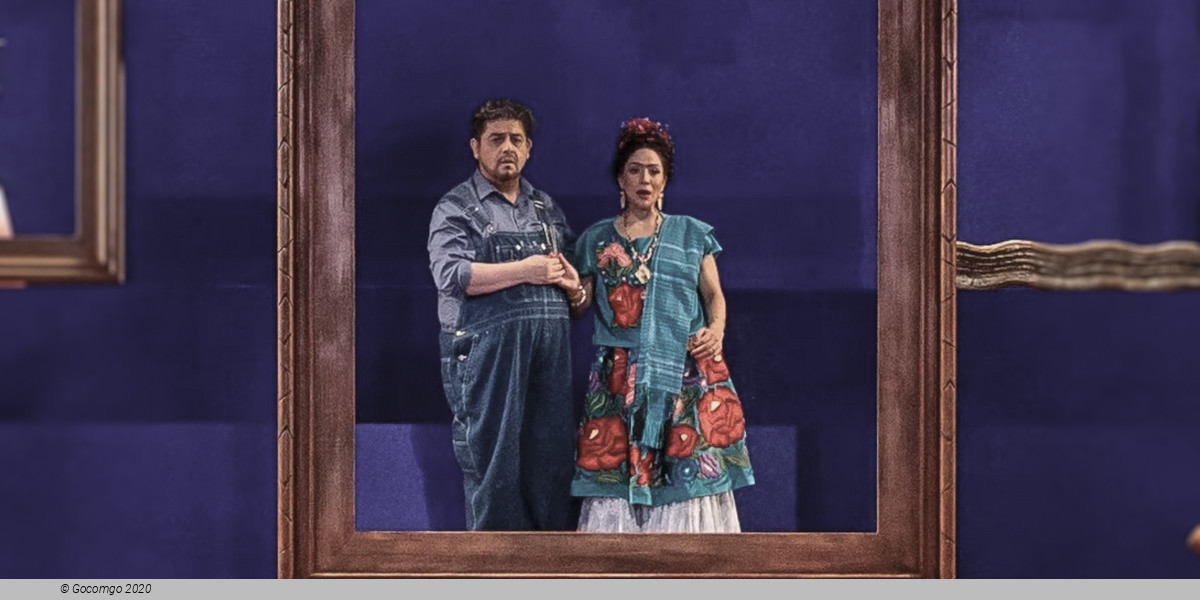
Frida sings “Hand me my brush,” about wanting to return to painting, as Diego looks on. He begs her to embrace him, but she tells him she can’t. The two end with, “We made fun of love, to love one another freely.” Frida looks at him, scrutinizes his clothes, his face, his hands. Suddenly she hugs him. Frida is instantly racked by pain, and the moment becomes almost psychedelic, “The Memory of Pain”. Diego invites her to paint with him, and three Fridas appear (like her own painted images), beckoning her into the canvas. Diego and Frida enter the picture frame, creating their own alternate reality.
Frida and Diego try to cling to their impossible dream of staying together inside a painting even as the chorus of departed souls sings of the end of the Day of the Dead and prepares to return to the underworld. Catrina begins marshalling the souls, and Leonardo bids a final farewell to the world. Catrina angrily notices Frida’s absence, but keeps her procession moving.
Left alone, Frida realizes that she and Diego cannot live in a dream of art—that their art was always a response to the world. Diego is ready to die at this moment—is he about to lose Frida to Catrina. He is ready to take his chances of being with Frida in the underworld. He calls out to the God of Mictlan (God of the underworld). Catrina re-appears. “Who calls?” Diego tells her his time has come. Catrina reminds him that it’s not up to him, but Frida begs her to help him.
Catrina and Frida sing Diego toward death (“Close your Eyes”). When she senses that Diego is ready, Catrina calls out to the god of Mictlan, and Diego succumbs to his mortality.
As Frida sings that she and Diego will be united for eternity, the set opens up to reveal an Aztec pyramid and the God of Mictlan. The chorus sings of his deliverance, of the evergreen power of his paintings, and Frida and Diego whisper their names to one another, as they are united in the underworld.






 301 Mercer Street Seattle, WA 98109