Marion Oliver McCaw Hall tickets 7 March 2027 - Lakmé in Concert | GoComGo.com

Lakmé in Concert

Marion Oliver McCaw Hall, Seattle, USA
All photos (1)
Select date and time
2 PM
From
US$ 147

E-tickets: Print at home or at the box office of the event if so specified. You will find more information in your booking confirmation email.

You can only select the category, and not the exact seats.
If you order 2 or 3 tickets: your seats will be next to each other.
If you order 4 or more tickets: your seats will be next to each other, or, if this is not possible, we will provide a combination of groups of seats (at least in pairs, for example 2+2 or 2+3).

Important Info
Type: Opera in Concert
City: Seattle, USA
Starts at: 14:00
Intervals: 1
Duration: 2h 50min
Sung in: French
Titles in: English

E-tickets: Print at home or at the box office of the event if so specified. You will find more information in your booking confirmation email.

You can only select the category, and not the exact seats.
If you order 2 or 3 tickets: your seats will be next to each other.
If you order 4 or more tickets: your seats will be next to each other, or, if this is not possible, we will provide a combination of groups of seats (at least in pairs, for example 2+2 or 2+3).

Cast
Performers
Conductor: Daniela Candillari
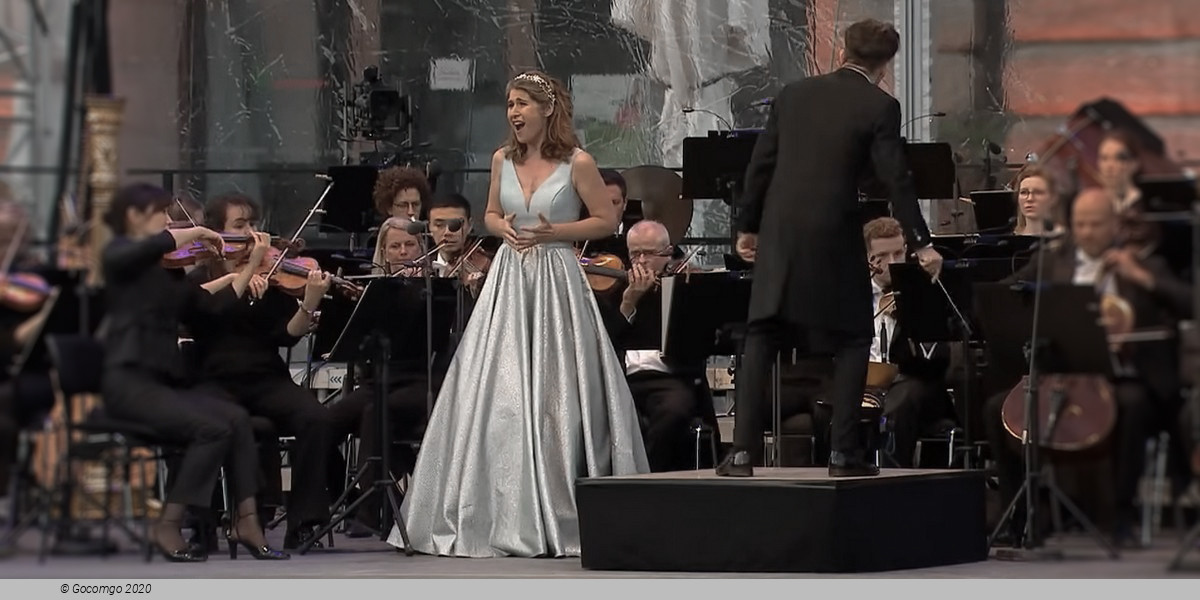
Soprano: Aigul Khismatullina
Soprano: Alexa Jarvis
Bass-Baritone: Christian Pursell
Mezzo-Soprano: Julie Boulianne
Chorus: Seattle Opera Chorus
Orchestra: Seattle Symphony Orchestra
Creators
Composer: Léo Delibes
Librettist: Edmond Gondinet
Librettist: Philippe Gille
Opera Company: Seattle Opera
Overview

Lakmé is an opera in three acts by Léo Delibes to a French libretto by Edmond Gondinet and Philippe Gille. Set in British India in the mid-19th century, Lakmé is based on Théodore Pavie's story "Les babouches du Brahmane" and novel Le Mariage de Loti by Pierre Loti. Gondinet proposed it as a vehicle for the American soprano Marie van Zandt.

The score, written from 1881 to 1882, was first performed on 14 April 1883 by the Opéra-Comique at the (second) Salle Favart in Paris, with stage decorations designed by Auguste Alfred Rubé and Philippe Chaperon (act 1), Eugène Carpezat and (Joseph-)Antoine Lavastre (act 2), and Jean-Baptiste Lavastre (act 3).

The opera includes the popular Flower Duet ("Sous le dôme épais") for a soprano and mezzo-soprano, performed in act 1 by Lakmé, the daughter of a Brahmin priest, and her servant Mallika. The name Lakmé is the French rendition of Sanskrit Lakshmi, the name of the Hindu Goddess of Wealth. The opera's most famous aria is the "Bell Song" ("L'Air des clochettes") in act 2.

Lakmé combines many orientalist aspects that were popular at the time: an exotic location, similar to other French operas of the period, such as Bizet's Les pêcheurs de perles and Massenet's Le roi de Lahore, a fanatical priest, mysterious Hindu rituals, and "the novelty of exotically colonial English people".

Following its premiere at the Opéra Comique in 1883, Lakmé reached its 500th performance there on 23 June 1909 and 1,000th on 13 May 1931. A series of performances took place at the Théâtre Gaîté Lyrique Paris in 1908, with Alice Verlet, David Devriès and Félix Vieuille.

Synopsis

Place: India
Time: Late nineteenth century, during the British Raj.

Act 1
The Hindus go to perform their rites in a sacred Brahmin temple under the high priest, Nilakantha. Nilakantha's daughter Lakmé (which derives from the Sanskrit Lakshmi), and her servant Mallika, are left behind and go down to the river to gather flowers where they sing together the Flower Duet. As they approach the water at the river bank, Lakmé removes her jewellery and places it on a bench. Two British officers, Frederic and Gérald (Delibes uses Frenchified versions of the then common English names Frederick and Gerald), arrive nearby on a picnic with two British girls and their governess. The British girls see the jewellery and, impressed with it, request sketches of it; Gérald volunteers to stay and make sketches of the jewellery. He spots Lakmé and Mallika returning and hides. Mallika leaves Lakmé for a while; while alone Lakmé sees Gérald and, frightened by the foreigner's incursion, cries out for help. However, simultaneously, she is also intrigued by him and so she sends away those who had responded to her call for help when they come to her aid. Lakmé and Gérald begin to fall in love with each other. Nilakantha returns and learns of the British officer's trespassing, vowing revenge on him for what he assumes to be an affront to Lakmé's honour.

Act 2
At a busy bazaar, Nilakantha forces Lakmé to sing (the Bell Song) in order to lure the trespasser into identifying himself. When Gérald steps forward, Lakmé faints, thus giving him away. Nilakantha stabs Gérald, wounding him. Lakmé takes Gérald to a secret hideout in the forest, where she lovingly nurses him back to health.

Act 3
While Lakmé fetches sacred water that will confirm the vows of the lovers, Fréderic, Gérald's fellow British officer, appears before Gérald and reminds him of his military duty to his regiment. Gérald sadly accepts that his colleague is correct. After Lakmé returns, she senses the change in Gérald and realises that she has lost him. She dies with honour, rather than live with dishonour, killing herself by eating the poisonous datura leaf.

Venue Info

Marion Oliver McCaw Hall - Seattle
Location   301 Mercer Street Seattle, WA 98109

Marion Oliver McCaw Hall is a performing arts hall in Seattle, Washington. Located on the grounds of the Seattle Center and owned by the city of Seattle, McCaw Hall's two principal tenants are Seattle Opera and Pacific Northwest Ballet. 

Marion Oliver McCaw Hall is a major performing arts venue located in the Seattle Center in Seattle, Washington. It serves as the home theatre for Pacific Northwest Ballet and the Seattle Opera, hosting their regular seasons, premieres, and large-scale productions. The building opened in 2003 after a complete renovation of the former Seattle Opera House, transforming it into a modern, spacious, and highly functional performance space.
The hall features a proscenium stage, a large orchestra pit, and advanced acoustics designed to support both ballet and opera. The auditorium seats approximately 2,900 people across multiple levels, including the Orchestra Level, First Tier, and Second Tier. The seating layout is shaped in a gentle horseshoe, offering excellent visibility from most seats and creating an intimate connection between performers and the audience.

McCaw Hall is known for its contemporary architectural design, which includes an expansive glass façade, open public spaces, and the iconic Grand Lobby, often illuminated for special events. The building also contains rehearsal studios, event rooms, and backstage facilities that support world-class productions.

Overall, Marion Oliver McCaw Hall is regarded as one of the most important cultural venues in the Pacific Northwest, combining modern comfort and technology with the artistic traditions of opera and ballet.

Important Info
Type: Opera in Concert
City: Seattle, USA
Starts at: 14:00
Intervals: 1
Duration: 2h 50min
Sung in: French
Titles in: English
Top of page