Vienna State Opera: Bluebeard's Castle Tickets | Event Dates & Schedule | GoComGo.com

Bluebeard's Castle Tickets

Vienna State Opera, Vienna, Austria
All photos (4)
1 / 4
Available Dates: 3 - 12 Oct, 2026 (5 events)
Important Info
Type: Opera
City: Vienna, Austria
Sung in: Hungarian

E-tickets: Print at home or at the box office of the event if so specified. You will find more information in your booking confirmation email.

You can only select the category, and not the exact seats.
If you order 2 or 3 tickets: your seats will be next to each other.
If you order 4 or more tickets: your seats will be next to each other, or, if this is not possible, we will provide a combination of groups of seats (at least in pairs, for example 2+2 or 2+3).

Cast
Performers
Choose the date to see the peformers
Creators
Composer: Alexander Zemlinsky
Composer: Béla Bartók
Librettist: Alexander Zemlinsky
Librettist: Béla Balázs
Author: Charles Perrault
Stage Director: Vasily Barkhatov
Overview

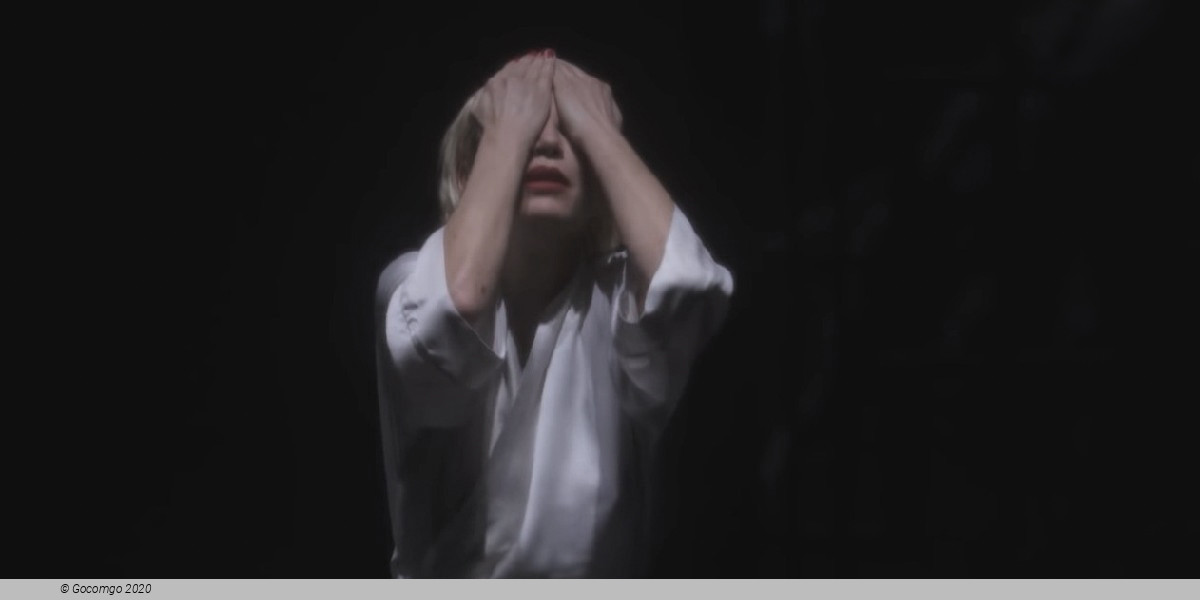
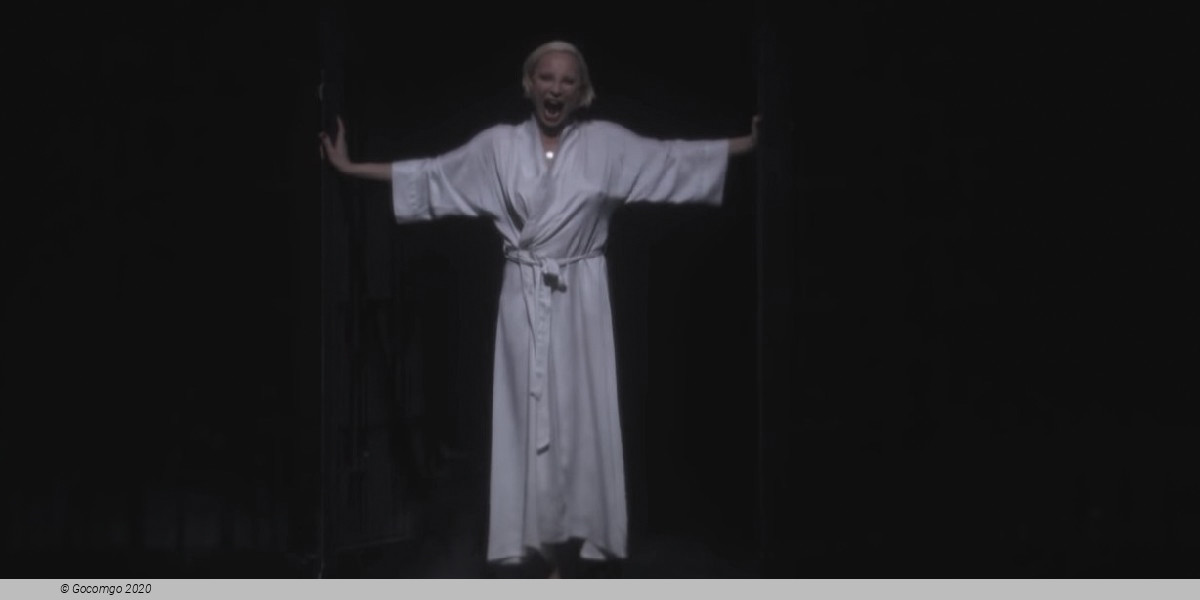
In Bartók's one-act opera, however, Judith's journey to the inner depths of her beloved Duke Bluebeard - symbolized by the opening of seven mysterious doors - ends in darkness and loneliness.

History
Premiere of this production: 24 May 1918, Royal Hungarian Opera House, Budapest

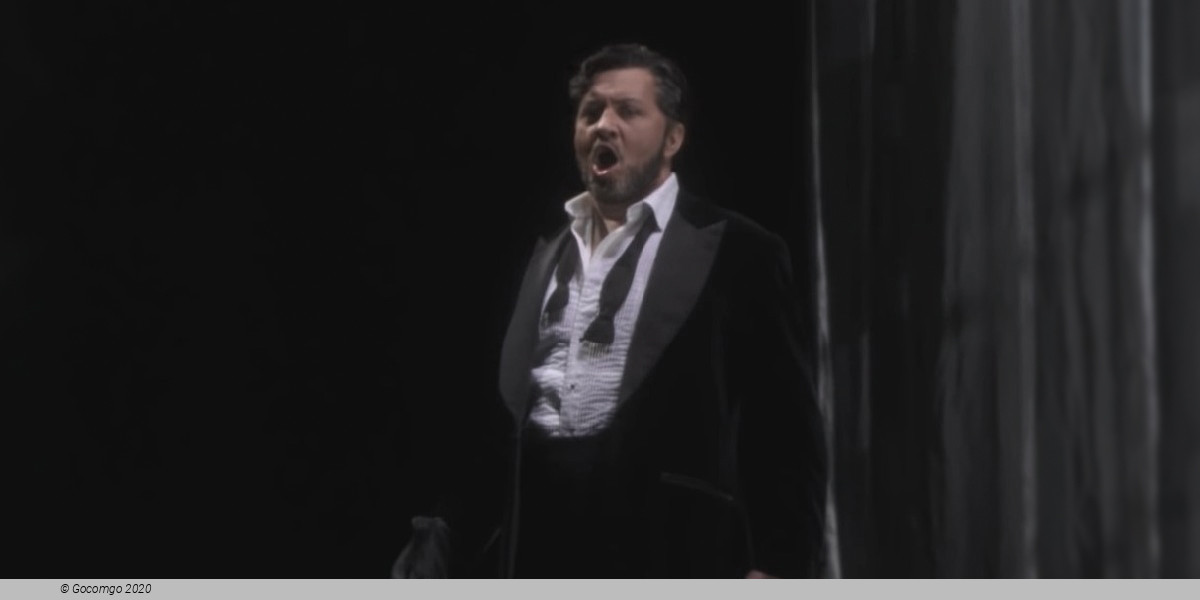
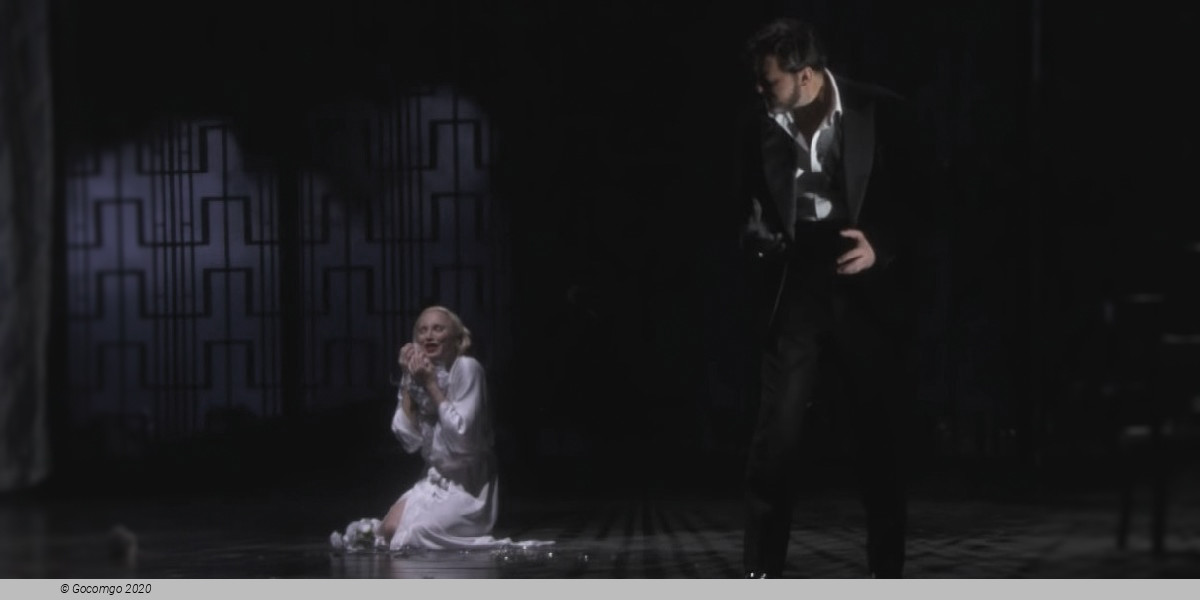
Bluebeard's Castle is a one-act expressionist opera by Hungarian composer Béla Bartók. The libretto was written by Béla Balázs, a poet and friend of the composer, and is written in Hungarian, based on the French literary tale La Barbe bleue by Charles Perrault. The opera lasts only a little over an hour and there are only two singing characters onstage: Bluebeard (Kékszakállú), and his new wife Judith (Judit); the two have just eloped and Judith is coming home to Bluebeard's castle for the first time.

Synopsis

Place: A huge, dark hall in a castle, with seven locked doors.
Time: Not defined.

Judith and Bluebeard arrive at his castle, which is all dark. Bluebeard asks Judith if she wants to stay and even offers her an opportunity to leave, but she decides to stay. Judith insists that all the doors be opened, to allow light to enter into the forbidding interior, insisting further that her demands are based on her love for Bluebeard. Bluebeard refuses, saying that there are private places not to be explored by others, and asking Judith to love him but ask no questions. Judith persists, and eventually prevails over his resistance.

The first door opens to reveal a torture chamber, stained with blood. Repelled, but then intrigued, Judith pushes on. Behind the second door is a storehouse of weapons, and behind the third a storehouse of riches. Bluebeard urges her on. Behind the fourth door is a secret garden of great beauty; behind the fifth, a window onto Bluebeard's vast kingdom. All is now sunlit, but blood has stained the riches, watered the garden, and grim clouds throw blood-red shadows over Bluebeard's kingdom.

Bluebeard pleads with her to stop: the castle is as bright as it can get, and will not get any brighter, but Judith refuses to be stopped after coming this far, and opens the penultimate sixth door, as a shadow passes over the castle. This is the first room that has not been somehow stained with blood; a silent silvery lake is all that lies within, "a lake of tears". Bluebeard begs Judith to simply love him, and ask no more questions. The last door must be shut forever. But she persists, asking him about his former wives, and then accusing him of having murdered them, suggesting that their blood was the blood everywhere, that their tears were those that filled the lake, and that their bodies lie behind the last door. At this, Bluebeard hands over the last key.

Behind the door are Bluebeard's three former wives, but still alive, dressed in crowns and jewellery. They emerge silently, and Bluebeard, overcome with emotion, prostrates himself before them and praises each in turn (as his wives of dawn, midday and dusk), finally turning to Judith and beginning to praise her as his fourth wife (of the night). She is horrified and begs him to stop, but it is too late. He dresses her in the jewellery they wear, which she finds exceedingly heavy. Her head drooping under the weight, she follows the other wives along a beam of moonlight through the seventh door. It closes behind her, and Bluebeard is left alone as all fades to total darkness.

Venue Info

Vienna State Opera - Vienna
Location   Opernring 2

The Vienna State Opera is one of the leading opera houses in the world. Its past is steeped in tradition. Its present is alive with richly varied performances and events. Each season, the schedule features 350 performances of more than 60 different operas and ballets. The members of the Vienna Philharmonic are recruited from the Vienna State Opera's orchestra. The building is also the home of the Vienna State Ballet, and it hosts the annual Vienna Opera Ball during the carnival season.

The 1,709-seat Renaissance Revival venue was the first major building on the Vienna Ring Road. It was built from 1861 to 1869 following plans by August Sicard von Sicardsburg and Eduard van der Nüll, and designs by Josef Hlávka. The opera house was inaugurated as the "Vienna Court Opera" (Wiener Hofoper) in the presence of Emperor Franz Joseph I and Empress Elisabeth of Austria. It became known by its current name after the establishment of the First Austrian Republic in 1921. The Vienna State Opera is the successor of the Vienna Court Opera, the original construction site chosen and paid for by Emperor Franz Joseph in 1861.

The opera house was the first major building on the Vienna Ringstrasse commissioned by the Viennese "city expansion fund". Work commenced on the house in 1861 and was completed in 1869, following plans drawn up by architects August Sicard von Sicardsburg and Eduard van der Nüll. It was built in the Neo-Renaissance style by the renowned Czech architect and contractor Josef Hlávka.

Gustav Mahler was one of the many conductors who have worked in Vienna. During his tenure (1897–1907), Mahler cultivated a new generation of singers, such as Anna Bahr-Mildenburg and Selma Kurz, and recruited a stage designer who replaced the lavish historical stage decors with sparse stage scenery corresponding to modernistic, Jugendstil tastes. Mahler also introduced the practice of dimming the lighting in the theatre during performances, which was initially not appreciated by the audience. However, Mahler's reforms were maintained by his successors.

Herbert von Karajan introduced the practice of performing operas exclusively in their original language instead of being translated into German. He also strengthened the ensemble and regular principal singers and introduced the policy of predominantly engaging guest singers. He began a collaboration with La Scala in Milan, in which both productions and orchestrations were shared. This created an opening for the prominent members of the Viennese ensemble to appear in Milan, especially to perform works by Wolfgang Amadeus Mozart and Richard Strauss.

Ballet companies merge

At the beginning of the 2005–2006 season, the ballet companies of the Staatsoper and the Vienna Volksoper were merged under the direction of Gyula Harangozó.

From the 2010–2011 season a new company was formed called Wiener Staatsballet, Vienna State Ballet, under the direction of former Paris Opera Ballet principal dancer Manuel Legris. Legris eliminated Harangozós's policy of presenting nothing but traditional narrative ballets with guest artists in the leading roles, concentrated on establishing a strong in-house ensemble and restored evenings of mixed bill programs, featuring works of George Balanchine, Jerome Robbins, Jiří Kylián, William Forsythe, and many contemporary choreographers, as well as a reduced schedule of the classic ballets.

Opera ball

For many decades, the opera house has been the venue of the Vienna Opera Ball. It is an internationally renowned event, which takes place annually on the last Thursday in Fasching. Those in attendance often include visitors from around the world, especially prominent names in business and politics. The opera ball receives media coverage from a range of outlets.

Important Info
Type: Opera
City: Vienna, Austria
Sung in: Hungarian

E-tickets: Print at home or at the box office of the event if so specified. You will find more information in your booking confirmation email.

You can only select the category, and not the exact seats.
If you order 2 or 3 tickets: your seats will be next to each other.
If you order 4 or more tickets: your seats will be next to each other, or, if this is not possible, we will provide a combination of groups of seats (at least in pairs, for example 2+2 or 2+3).

From
$ 88
Top of page